
Prophet Hudهود
Prophet Hud is one of the figures of Islam whose story Sukun Kids tells for children ages 3 and up, remembered as the wind. The strongest people in the land had everything. One prophet reminded them who gave it, and stood alone, relying on Allah. The app carries 5 stories about Prophet Hud, teaching Gratitude, Trust in Allah, Turning back to Allah, drawn from the Qur'an and classical Sunni tafsir (see Hud 11:56).
Read free below. Listen in the app with Premium, or hear Prophet Yusuf’s full story free on this page.

Prophet Yusuf’s full story is free. Press play.
The complete 18-minute story and 6 short stories, narrated for children. Listen right here, no sign-up.
“I rely on Allah, my Lord and your Lord.”
The story of Prophet Hud, told for children
The complete text of every Prophet Hud story in Sukun Kids. Sources: the Qur’an (Hud 11:56), Ibn Kathir’s Stories of the Prophets, and Ma’ariful Qur’an; the seerah and hadith for the companions. Read it aloud tonight, or press play in the app and let the narration carry it. How the stories are reviewed →
Prophet Hud18 min listen
+
Come with me. Today, we're going on a journey... far, far away... and long, long ago.
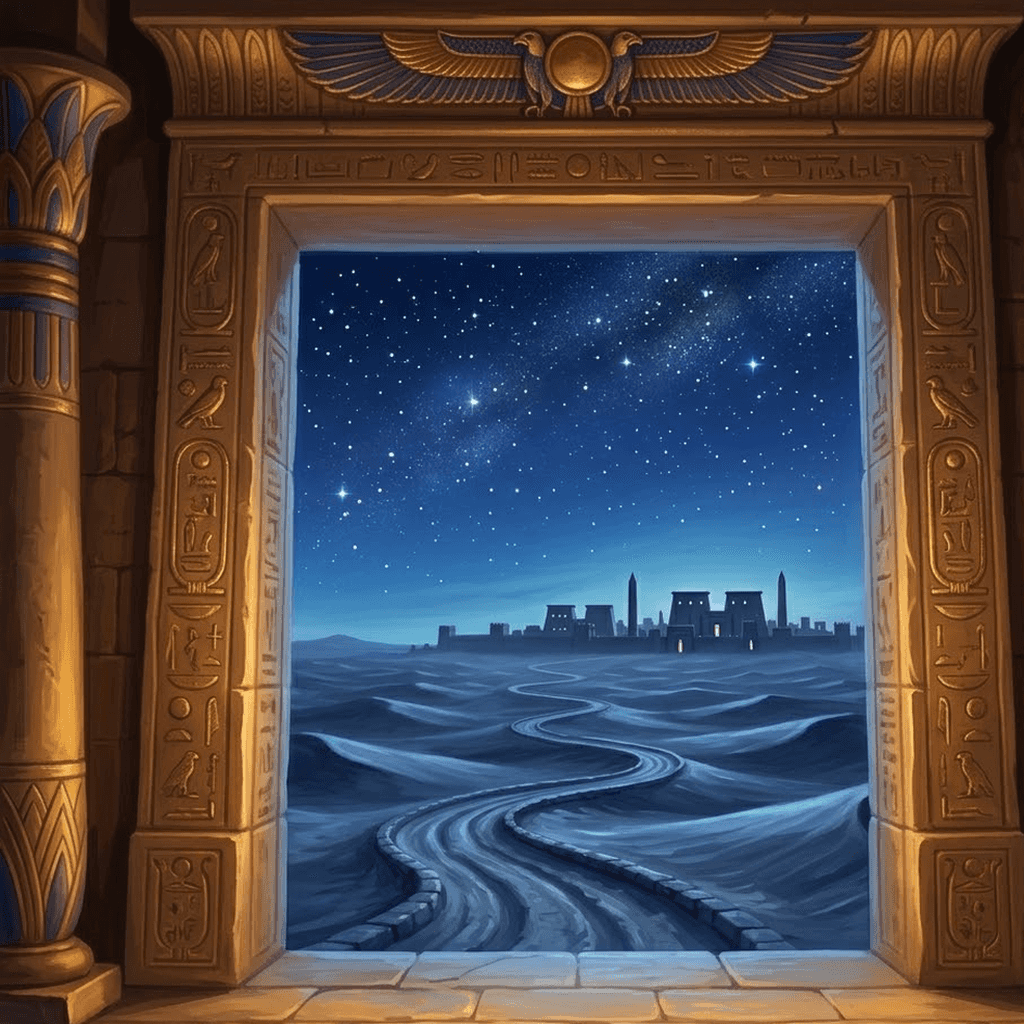
Picture a land of sand. Not flat sand. Great curving dunes, rising and falling like waves in a golden sea.
Listen. A soft wind is moving over them. *Shhhh...* A dry, gentle whisper across the sand.
Between the dunes there are valleys. And in those valleys live a people so tall... and so strong... that they think nothing in the whole world could ever stand against them.
One day, the people look up.
Far away, at the edge of the sky, something is coming toward their valleys. Something dark. Something wide.
A cloud.
They come out of their tall houses. They point at it. They call to one another, and their voices are glad.
"Look! This is a cloud bringing us rain!"
But it is not rain.
So what is it? And why had one man kept asking these people to say sorry to Allah?
To understand that cloud, we have to meet these people on a clear, bright day... back when the sky was blue... and they had everything.
This is the story of Prophet Hud... alayhis salam.
Long, long ago, after the people of Prophet Nuh, alayhis salam, were gone... Allah made a new people grow strong in the land. They were called ʿĀd.
They lived in a place called al-Aḥqāf. It means the sand dunes. Scholars tell us it was in the far south of Arabia, in the lands we now call Yemen, close to Oman.
And the people of ʿĀd had so much.
Allah had made them tall. Broad. Strong. Stronger than any people around them.
They had herds of animals, grazing wherever the ground was green. They had children... lots of children... running and laughing between the houses.
They had gardens. And springs of cool, clear water, bubbling up out of the ground.
Can you imagine it? Hot sand all around you... and then you step into a shady garden, and you hear a spring trickling. Can you feel how cool that water is on your fingers?
And oh... how they built.
On every high place, they put up a great, dazzling building. Not because they needed it. Just for show... just to amuse themselves.
The Qur'an speaks of their tall pillars. It says no people like them had ever been created in the land.
They built strong fortresses, thick and high... as if they were going to live in them forever.
Every one of those gifts came from Allah. The strength. The children. The gardens and the springs. Even the soft wind that whispered over their dunes.
But the people of ʿĀd had drifted far away from Allah. Over a long time, they had carved statues out of stone. They gave the statues names. And they worshipped them... instead of the One who had given them everything.
And the stronger they grew... the prouder they became.
So Allah sent them a messenger.
Not a stranger from far away. One of their own. The Qur'an calls him their brother.
His name was Hud.
Prophet Hud stood among his people, and he said, "O my people... worship Allah. You have no god other than Him. Will you not be mindful of Him?"
"I am a messenger you can trust," he told them. "And I do not ask you for any payment. My reward is only from the One who created me."
Then he reminded them of everything they had.
"Be mindful of the One who gave you all that you know," he said. "He gave you animals, and children... and gardens, and springs."
"Remember how He made you the ones who came after the people of Nuh... and made you tall, and strong."
*Fadhkurū ālāʾa-llāhi laʿallakum tufliḥūn.*
"So remember the gifts of Allah... so that you may succeed."
Take a slow breath in... and out. Now think of one gift Allah gave you today. Maybe a cool drink of water. Maybe a warm hug. Just one gift... and Who it came from.
That was what Hud was asking his people to do. Remember. And be thankful to the One who gave.
And Hud brought them a promise from Allah. A beautiful one.
"O my people," he said, "ask your Lord to forgive you. Then turn back to Him."
*Istaghfirū rabbakum thumma tūbū ilayh.*
"He will send rain down from the sky upon you, in showers. And He will add strength to your strength."
Imagine that. They were already strong. And Allah was offering them even more... rain for their gardens, strength on top of their strength... if only they would say sorry, and come back.
The door was wide open. They only had to walk through it.
But the important men of ʿĀd, the ones who refused, only mocked him. "We think you are foolish," they said. "And we think you are lying."
Imagine their laughter rolling down the valley... bouncing off the tall stone walls.
Listen to how Hud answered them.
"O my people... there is nothing foolish in me. I am a messenger from the Lord of all the worlds. I bring you the messages of my Lord. And I am someone you can trust to give you good advice."
But they would not listen. "Have you come to make us worship Allah alone," they said, "and leave what our fathers worshipped? It is all the same to us whether you warn us or not. We will not be punished."
A few people listened to Hud... and believed him. But most of ʿĀd would not.
Imagine the chiefs turning their backs on him... and walking away, up toward their great fortresses, so sure of themselves.
And then, in their pride, they said the biggest words of all.
"Who is stronger than us?"
The Qur'an answers them. Did they not see... that Allah, who created them, is far stronger than they are?
Their tall pillars... the strength in their arms... all of it was a gift from Allah.
The people of ʿĀd grew angrier.
"O Hud," they said, "you have not brought us any clear sign. We will not leave our gods just because you say so. And we will never believe you."
They even said that one of their stone gods must have done something bad to him.
Now picture it. One man... and in front of him, the whole proud nation of ʿĀd. Tall. Strong. Their great fortresses standing behind them.
And Hud said, "I call Allah to witness... and you be witnesses too... that I have nothing to do with the things you worship besides Him."
"So make your plans against me, all of you together. And do not give me even a moment to wait."
All of them... against one man. How could he speak like that?
Because of what he said next.
"I rely on Allah, my Lord and your Lord. There is no creature that moves, except that He holds it by its forelock."
*Mā min dābbatin illā huwa ākhidhun bi-nāṣiyatihā.*
The forelock is the hair at the very front of the head. Hud was telling them that every creature on the earth is under Allah's power. Every camel in the desert. Every bird in the sky. Every tall, proud man of ʿĀd.
Not one of them could do a single thing unless Allah allowed it.
"Indeed," Hud said, "my Lord is on a straight path." Allah is always fair. He never wrongs anyone.
So Hud was not leaning on his own strength. He was leaning on Allah. And no one... no one at all... is stronger than Allah.
Outside, the soft wind kept whispering over the dunes. *Shhhh...* And it, too, moved only by Allah's command.
But the people still would not turn back.
"Then bring us what you promise," they said, "if you are telling the truth."
Hud answered, "Only Allah knows when it will come. I only tell you the message I was sent with."
"So wait," he said. "And I will wait with you."
"And if you turn away... I have already given you the message. My Lord will bring another people after you. And you cannot harm Him in the least."
And then the day came. The one we started with.
The people look up. A dark, wide cloud is coming toward their valleys.
"This is a cloud bringing us rain!"
But it was not the rain they hoped for.
It was a wind. The very thing they had dared Hud to bring.
The Qur'an tells us it was a roaring, mighty wind. By Allah's command, it blew for seven nights and eight days, without stopping.
And when at last it was quiet... the valleys were still.
The Qur'an says that nothing of them could be seen... only their homes. And the proud people who had asked, "Who is stronger than us?"... were gone.
But Hud was safe. And so was every single person who had believed with him.
The Qur'an tells us that when Allah's command came, He saved Hud and those who believed with him... by mercy from Him.
Not by their own strength. Not by tall buildings or thick fortress walls. By Allah's mercy.
The strongest people in the land were gone. And the ones who had leaned on Allah were kept safe.
And Allah did not let Hud's story be forgotten. In the Qur'an, Allah told Prophet Muhammad ﷺ, "Mention the brother of ʿĀd." And a whole surah of the Qur'an carries his name... Surah Hud.
So now we know what that dark cloud was. It was not rain.
The real rain had been offered all along, in Hud's promise from Allah. Ask your Lord to forgive you... turn back to Him... and He will send rain from the sky, and add strength to your strength.
And now... slowly... we leave al-Aḥqāf behind. The curving dunes. The quiet valleys. The soft wind whispering over the sand. *Shhhh...* And we travel back home. To right here. Right now.
I wonder how many of Allah's gifts you will notice tomorrow... and how many times you will say thank you.
These are Prophet Hud's own words, from the day he stood before them all. They mean... I rely on Allah, my Lord and your Lord. Whisper them with me, if you like...
*Innī tawakkaltu ʿala-llāhi rabbī wa rabbikum.*
The People Who Had Everything7 min listen
+
Come with me. Today, we're going on a journey... far, far away... and long, long ago.
We're going to a garden. A green, shady garden, hidden among great golden sand dunes, in the land of al-Aḥqāf.
Step in from the hot sand. Feel the shade fall over you, cool and soft. And listen. Somewhere close by... *trickle, trickle*... a spring of water is bubbling up out of the ground.
This garden belongs to a people called ʿĀd. And the people of ʿĀd have so much.
Beyond the garden wall, herds of animals graze on the green ground. Children run and shout between the houses.
And the people themselves are tall. Broad. Strong. Allah made them stronger than any people around them. The Qur'an says no people like them had ever been created in the land.
On every high place they have put up a great, dazzling building. Not because they need one. Just for show.
But there is something the people of ʿĀd have forgotten.
They have carved statues out of stone. They worship them. And they have stopped thanking the One who gave them everything.
Now imagine a man coming among them. He is one of their own. The Qur'an calls him their brother.
This is Prophet Hud, alayhis salam.
Hud has a message from Allah, and it is about all of this. The garden. The spring. The children. The herds.
"O my people," he says, "worship Allah. You have no god other than Him."
And then he asks them to notice. Really notice. What they already have.
"Be mindful of Allah," Hud tells them. "The One who gave you all that you know."
*Amaddakum bi-anʿāmin wa banīn... wa jannātin wa ʿuyūn.*
"He gave you animals, and children... and gardens, and springs."
Listen. *Trickle, trickle.* The spring keeps on bubbling, as if it is agreeing with him.
Hud reminds them of more. "Remember how Allah made you the ones who came after the people of Prophet Nuh, alayhis salam. And He made you tall, and strong. So remember the gifts of Allah... so that you may succeed."
Not one of those gifts came from the statues. Every one came from Allah.
But most of the people of ʿĀd will not listen. They are proud of their strength and their tall buildings. "Who is stronger than us?" they say.
Imagine having a whole garden full of gifts... and never once saying thank you.
Now let us do the opposite. Hud named four gifts. Animals. Children. Gardens. Springs. So let us count four of our own... one finger at a time.
One finger... someone who looks after you. Two fingers... a home to sleep in. Three fingers... food on your plate. And four... the water you drink, cool and clear, like that spring. *Trickle, trickle.*
Take a slow breath in... and out. And in your heart, say: alhamdulillah. Feel how warm that thank-you is, right in the middle of your chest.
That is what Hud asked of his people: to remember who gave them every gift, and to worship Him alone.
You have gifts all around you too. Some are big. Most are small and quiet, like a spring you only hear when you stop and listen... and thanking the One who gave them is a kind of worship.
I wonder how many gifts are hiding in your day... waiting for you to notice them.
And now... we leave the shady garden. The herds. The children's voices. The spring, *trickle, trickle*, getting softer and softer behind us. And we cross the golden dunes, all the way home. To right here. Right now.
Long after Hud, Prophet Muhammad ﷺ took the hand of his companion Muʿādh ibn Jabal, radiyallahu anhu, and taught him a dua to say after every prayer. It means... O Allah, help me to remember You, to thank You, and to worship You well. Say it gently, if you like...
*Allāhumma aʿinnī ʿalā dhikrika wa shukrika wa ḥusni ʿibādatik.*
Say Sorry, and the Rain Will Come7 min listen
+
Come with me. Today, we're going on a journey... far, far away... and long, long ago.
We're going to a valley between tall, curving sand dunes. The sky above is wide and blue and empty. Not one cloud.
Listen closely. Can you hear it? Nothing yet. But soon, I want you to imagine a sound. The first drops of rain. *Pat... pat... pat.*
Hold on to that sound.
In this valley live the people of ʿĀd. They are tall, and strong, and proud, with gardens and springs, herds and children, and great stone buildings.
But they have turned away from Allah. They worship statues of stone instead.
And Allah has sent them a messenger, one of their own. Prophet Hud, alayhis salam.
He has already told them to worship Allah alone. He wants no payment from them.
Now he stands before his people... and he offers them something wonderful.
"O my people," he says. "Ask your Lord to forgive you. Then turn back to Him."
*Istaghfirū rabbakum thumma tūbū ilayh.*
"He will send rain down from the sky upon you, in showers. And He will add strength to your strength."
Imagine that. *Pat... pat... pat.* Rain pouring onto their gardens. The springs running full. And on top of all their strength... even more.
And what did they have to do?
Say sorry to Allah. Really mean it. And come back to Him.
That was all. No long journey. No heavy price.
Have you ever done something you wished you had not done? Maybe you said something unkind. Maybe you grabbed a toy that was not yours. Can you feel how heavy that feels, right in the middle of your chest?
Saying sorry to Allah is how that heaviness starts to lift.
You do not need anyone to say it for you, or a special place, or a special time. You can say it right now, in your heart, and Allah hears you. Then comes the second part. *Turn back to Him.* Try again. Do better next time. One small step at a time.
Now imagine the valley as Hud's words go out. Faces in the crowd turn toward him. Someone has a hand resting in a cool spring, and stops still, listening.
Rain for the gardens. Strength on top of strength. For a moment, the whole valley is quiet.
And then the chiefs speak.
The people of ʿĀd would not take the offer. "You have not brought us a clear sign," they told Hud. "We will not leave our gods because you say so."
The door was wide open. And most of them would not walk through it.
But that same door is open for you, too.
Long after Hud, Prophet Muhammad ﷺ, the last of all the prophets, told his companions that he asked Allah for forgiveness, and turned back to Him... more than seventy times every single day.
Prophet Muhammad ﷺ asked Allah to forgive him and turned back to Him, again and again, every day. So when you say sorry to Allah, there is nothing to feel ashamed of. It is a beautiful thing to do.
Take a slow breath in... and out. Let your shoulders go soft. If there is anything heavy in your chest today, you can hand it to Allah with one small word. Sorry.
And listen. *Pat... pat... pat.* Like rain on a thirsty garden... a sorry from the heart can leave you feeling fresh and clean.
I wonder how light your heart might feel... after one small sorry to Allah.
And now... we leave the valley of ʿĀd. The quiet dunes. The soft sound of rain, *pat... pat*, fading behind us. And we travel back. To right here. Right now.
These are the very words Prophet Muhammad ﷺ used. They mean... I ask Allah to forgive me, and I turn back to Him. You can whisper them any time at all...
*Astaghfirullāha wa atūbu ilayh.*
Allah Holds Every Creature7 min listen
+
Come with me. Today, we're going on a journey... far, far away... and long, long ago.
We're going to a wide open place among the sand dunes, in the land of the people of ʿĀd. The sand is warm. The air is still.
Imagine, right by your feet... a tiny beetle, black and shiny, walking across the sand. Its little legs go *tik-tik-tik*. It leaves the smallest trail of tiny dots behind it.
And now, beyond the little beetle...
There stands a crowd. A huge crowd. The people of ʿĀd, the tallest and strongest people in all the land. And behind them rise their great stone fortresses, thick and high.
These people once said, "Who is stronger than us?" And today, they are angry.
They are angry with one man.
He is Prophet Hud, alayhis salam. Allah sent him to them, to call them to worship Allah alone. And they do not want to hear it.
"O Hud," they say, "you have not brought us a clear sign. We will not leave our gods because you say so. And we will never believe you."
They even say that one of their stone gods must have harmed him.
Imagine standing where Hud stands. One man... and that whole crowd in front of him. Can you feel how your heart might start to thump?
Hud answers them.
"I call Allah to witness... and you be witnesses too... that I have nothing to do with the things you worship besides Him."
And then he says something nobody expects.
"So make your plans against me, all of you together. And do not give me even a moment."
Not even the blink of an eye.
How can one man say that to a whole nation? Is he stronger than all of them?
No. And this is the reason why.
"I rely on Allah," Hud says. "My Lord, and your Lord."
"There is no creature that moves, except that He holds it by its forelock."
*Mā min dābbatin illā huwa ākhidhun bi-nāṣiyatihā.*
The forelock is the hair right at the front of the head. And Hud is telling them that every creature that moves is under Allah's power. Every single one.
The tall man in the front of the crowd. The camel kneeling by the fortress wall. The bird crossing the sky.
And the tiny beetle at your feet. *Tik-tik-tik.* Even that little beetle cannot take one step unless Allah allows it.
So the crowd can make all the plans they like. Not one of them can do a single thing unless Allah allows it.
"Indeed," Hud says, "my Lord is on a straight path." Allah is always fair. He never wrongs anyone.
That is why Hud can stand there, one man in front of them all. He is not leaning on his own strength. He is leaning on Allah.
Take a slow breath in... and out. Feel your shoulders drop. Feel your breath go soft.
There may be days when you feel small. When the people around you are bigger, or louder, or all on one side. When you are the only one who wants to do the right thing.
On those days, you can remember the beetle. Everything in the whole world is under Allah's power. The biggest things and the smallest things. And Allah sees you, and hears you, and is always fair.
You do not have to be the strongest. You only have to lean on Allah.
I wonder what that crowd thought... hearing one man speak to them like that.
And now... we leave the wide open sand. The crowd. The fortresses. And the little beetle, *tik-tik-tik*, walking on its way. We follow its tiny trail across the dunes... all the way home. To right here. Right now.
Here are Prophet Hud's own words, from that very day. They mean... I rely on Allah, my Lord and your Lord. Say them softly, as many times as you like...
*Innī tawakkaltu ʿala-llāhi rabbī wa rabbikum.*
The Cloud That Was Not Rain7 min listen
+
Come with me. Today, we're going on a journey... far, far away... and long, long ago.
We're going to the top of a tall sand dune, high above a green valley. The valley belongs to the people of ʿĀd.
Feel that? A little breeze, tugging at your sleeve. Tug... tug. Then still again.
Down below, the people of ʿĀd are going about their day. Tending their gardens. Watching their herds. Busy, and proud, and sure of themselves.
Prophet Hud, alayhis salam, has been calling them. Worship Allah alone. Thank Him for His gifts. Ask Him to forgive you.
A few people listened and believed. Most would not.
"Then bring us what you promise," they had told him, "if you are telling the truth."
And Hud had answered, "Only Allah knows when it will come. I only tell you the message I was sent with."
Now... the breeze tugs at your sleeve again. A little stronger this time. Tug... tug.
And far away, at the edge of the sky, something appears.
A cloud. A wide, dark cloud, spreading across the sky, coming straight toward their valleys.
The people see it. They stop what they are doing. They call out to each other, and their voices are happy.
*Hādhā ʿāriḍun mumṭirunā.*
"This is a cloud bringing us rain!"
Can you imagine how glad they felt? A great cloud, full of rain, for their gardens and their springs.
But it was not rain.
The Qur'an tells us it was the very thing they had dared Hud to bring. A wind.
By Allah's command, a mighty wind blew over them. For seven nights and eight days, it did not stop.
And when at last it was over... the valley was quiet. Very quiet. The Qur'an says that nothing of them could be seen, only their homes.
But here is the most important part of all.
*Najjaynā Hūdan wa-lladhīna āmanū maʿahū bi-raḥmatin minnā.*
Allah saved Hud, and those who believed with him... by mercy from Him.
Every believer. Kept safe. Not by tall walls. Not by strong arms. By Allah's mercy.
Take a slow breath in... and out. Let it go out slowly, like a soft breeze.
Now, here is something amazing.
Long, long after Hud, Prophet Muhammad ﷺ remembered this story.
Aisha, the wife of the Prophet Muhammad ﷺ, radiyallahu anha, told us about it. When clouds gathered in the sky, his face would change. He would go in and out of the house. And when the rain finally fell, the worry left his face.
Aisha asked him why. And he said that it might be like the cloud the people of ʿĀd saw... when they said, "This is a cloud bringing us rain."
And whenever the wind blew strongly, he made a special dua.
He asked Allah for the good of the wind. The good that it carries. And the good that it was sent with. And he asked Allah to keep him safe from any harm in it.
Wind can bring so much good. Cool air on a hot day. Clouds full of rain. And every breeze blows only by Allah's command.
So the next time the wind tugs at your sleeve... you can ask Allah for its good, just as Prophet Muhammad ﷺ did.
I wonder what the wind will bring, the next time it blows near you.
And now... we climb down from the tall dune. We leave the quiet valley of ʿĀd behind. One last tug of the breeze at your sleeve... tug... and we travel all the way home. To right here. Right now.
These are the first words of the dua Prophet Muhammad ﷺ said when the wind blew strongly. They mean... O Allah, I ask You for its good, and the good of what it carries, and the good of what it was sent with. Say them softly...
*Allāhumma innī asʾaluka khayrahā wa khayra mā fīhā wa khayra mā ursilat bih.*


Hear Prophet Hud's story narrated tonight.
This audio story is included with Premium. Prophet Yusuf’s full story is free to try first.
Listen to Prophet Yusuf’s story free